
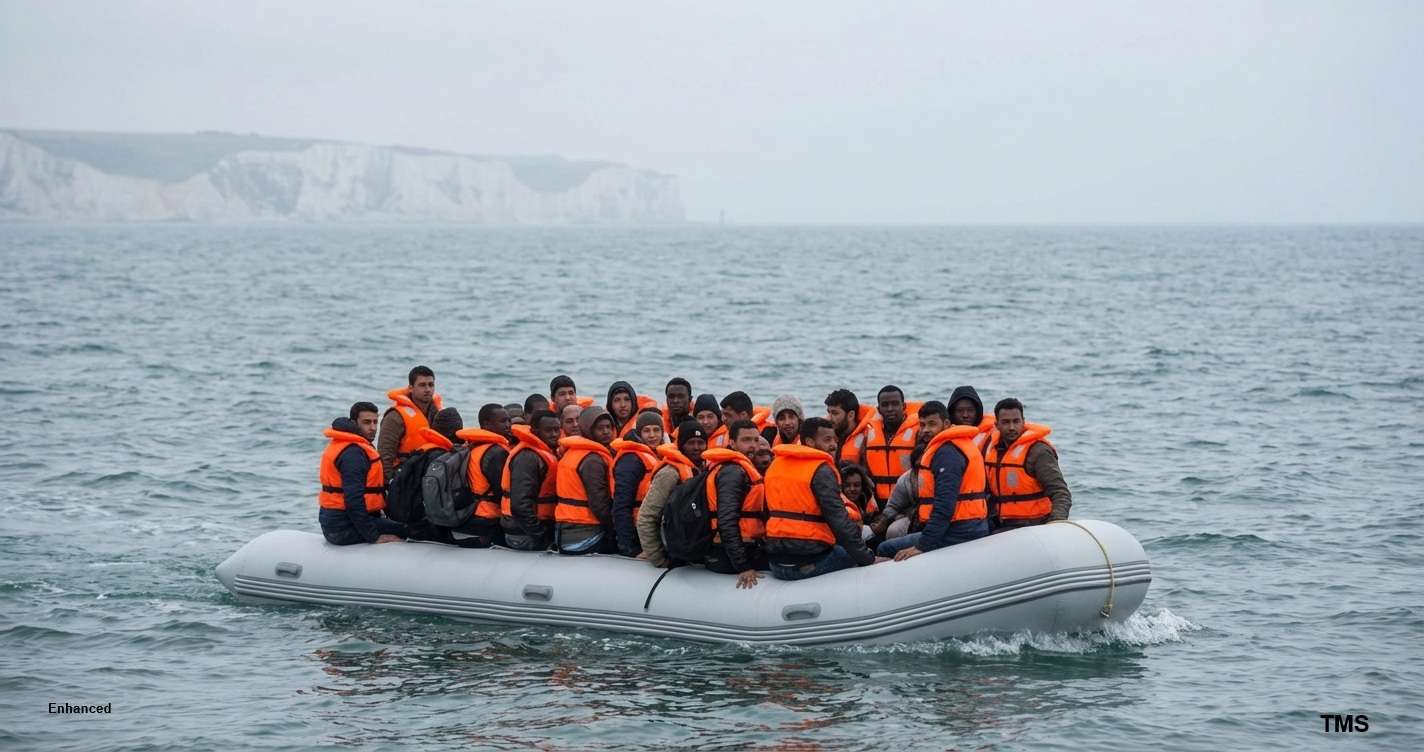
White House roadmap warns Europe could look very different in decades as migration, low birthrates threaten NATO cohesion
The Trump Administration’s 2025 National Security Strategy warns that mass migration and declining birthrates in Europe could reshape societies, strain NATO cohesion, and alter allied policies, elevating demographic change into a central U.S. strategic concern.
Key takeaways
- White House NSS frames migration and falling birthrates in Europe as strategic risks to alliance cohesion and U.S. interests.
- Reporting and analysts note the NSS links demographic change to political shifts inside NATO — warning some allies could look “markedly different” within decades (Le Monde).
- CSIS argues the NSS breaks with past practice by treating migration and identity as core security issues rather than primarily humanitarian or economic matters.
Main analysis
Europe’s demographic warnings in the NSS
The document, titled the 2025 National Security Strategy, declares that “The Era of Mass Migration Is Over.” It argues that who a country admits, in what numbers and from where, will help determine its future political character and cohesion.
The NSS ties migration and low birthrates to risks that can erode social cohesion, strain public services and change political landscapes, warning that falling fertility and large migration flows could alter the character and politics of some NATO members within decades.
Migration framed as a strategic threat
Unlike many previous U.S. strategies, the NSS says mass migration has “strained domestic resources, increased violence and other crime, weakened social cohesion, distorted labor markets, and undermined national security.” It asserts that sovereign states have a right — and duty — to tighten immigration controls.
“The NSS calls for full control over borders and transportation networks and for nations to work together to stop ‘destabilizing’ migration.”
Practical policy prescriptions include strengthening maritime forces — a bigger Coast Guard and Navy presence to secure sea lanes and counter illegal migration and trafficking — and an “Enlist and Expand” approach to recruit partners in the Western Hemisphere to control flows of migrants and illicit drugs (White House NSS).
How this connects to the last decade of European politics
The NSS builds on political battles since about 2015, when waves of migrants from the Middle East, Africa and South Asia influenced elections and strengthened anti-immigration parties in countries including Germany, France, Italy, Sweden, Austria and the Netherlands.
European policy responses — externalized border control agreements with Turkey and North African states and tougher asylum procedures — are now elevated in the NSS into matters that could shape NATO cohesion and partners’ foreign-policy choices (Le Monde; White House NSS).
Reactions from analysts and allies
CSIS highlights alarm at the document’s civilizational tone — language about “Western identity” and warnings that some NATO members might become “majority non‑European.” Analysts warn that this framing is unusual for official U.S. documents and risks straining ties with European capitals that view such language as ideologically loaded.
Critics also say the emphasis on migration could understate other threats to NATO’s future — including defense industrial capacity, cyber threats and interoperability — and could push policy toward harder enforcement at the expense of alliance-building and values-based diplomacy (CSIS; Le Monde).
Policy shifts the NSS proposes
- Stricter border controls and tighter immigration systems (White House NSS).
- Joint action with allies to stop flows deemed destabilizing, not only to promote “orderly” migration (White House NSS).
- Strengthening maritime and law-enforcement capacity to interdict illegal migration and trafficking (White House NSS).
These measures are framed as protecting sovereignty and securing resources seen as vital to national and alliance resilience.
Why the language matters for NATO and diplomacy
By tying alliance strength to cultural cohesion and demographic trends rather than solely to military capacity and shared values, the NSS could make diplomatic conversations with European partners more fraught — especially where governments reject linking migration to civilizational decline (Le Monde; CSIS).
Implications for Los Angeles, California
Economic impact: LA’s trade, tourism and investment links with Europe mean that tighter European migration and border policies could ripple into labor flows, education exchanges, and defense collaborations that benefit local firms (White House NSS).
Political consequences: As a diverse city with strong immigrant communities, Los Angeles may see local leaders and officials push back against rhetoric or policies that stigmatize migrants — influencing congressional and state responses (Le Monde).
Social effects: Local social services, schools and NGOs could face increased demand for legal aid and community assistance if asylum pathways become more complex — a potential domestic spillover of tougher transatlantic practices (White House NSS).
Cultural relevance: LA’s cultural institutions and artists may push back against civilizational language about “Western identity”, using museums, universities and film platforms to contest narratives that frame diversity as a vulnerability (CSIS).
Practical applications for residents: Students, businesses and legal clinics in LA could face tangible changes — from visa and exchange program shifts to altered demand for skilled European workers — if transatlantic relationships and policies evolve along NSS lines (White House NSS).
Sources and further reading
- 2025 National Security Strategy, White House
- US national security strategy targets Europe and spares its adversaries — Le Monde
- National Security Strategy: good, not so great, and alarm bells — CSIS
This reporting examines how the Trump NSS Europe migration language, concerns about a NATO demographic shift, and U.S. policy changes are shaping debates in capitals and communities — including Los Angeles — about migration, identity and alliance politics.


