
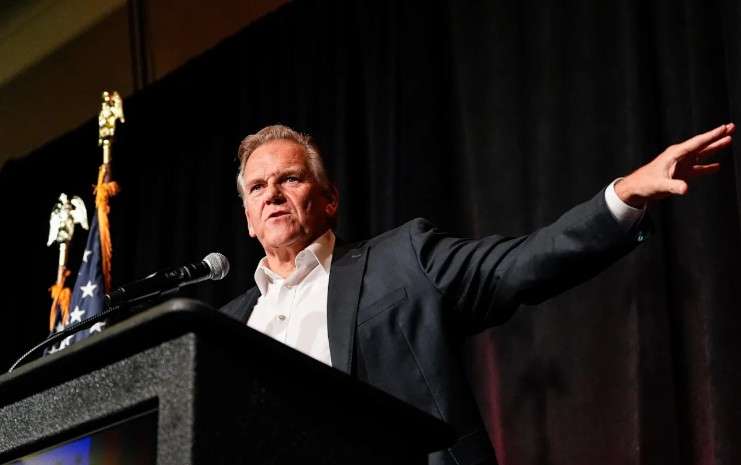
Rogers urges National Guard deployment to Detroit, drawing sharp Democratic backlash
Republican Senate candidate Mike Rogers urged President Donald Trump to deploy the National Guard to Detroit, citing rising violent crime, sparking sharp Democratic backlash and renewed debate over federal intervention, local autonomy, and historical trauma in the city.
- Rogers called for a National Guard deployment to Detroit and urged Mayor Mike Duggan to seek federal aid, citing a claimed 32% drop in violent crime in Washington, D.C., after a Guard presence — reported by Deadline Detroit.
- Democrats, led by Congresswoman Haley Stevens, rejected the plan as historically harmful and warned it would recall the 1967 troop deployments and risks of presidential overreach (Deadline Detroit; WEMU).
- Local leaders and residents voiced resentment toward outside military interventions and emphasized city-led solutions and investments in community-based programs (Daily Detroit).
- Michigan Democrats are pursuing legislation to limit domestic military deployments, framing the move as a safeguard against executive overreach (WEMU).
What Rogers proposed and why
Rogers, a Republican candidate for U.S. Senate, argued Detroit needs federal assistance to curb rising gun violence and public-safety concerns. He told reporters the city “has become a hub for violent crime” and urged Mayor Mike Duggan to request a National Guard deployment from the president, framing the call as using federal resources when city systems are strained. His remarks referenced a claimed 32% reduction in violent crime in Washington, D.C., after a Guard presence — a statistic reported in Deadline Detroit.
Democratic response and historical context
Democrats, including Congresswoman Haley Stevens, quickly condemned the proposal as wrong and potentially retraumatizing, invoking Detroit’s history with federal troop deployments during the 1967 riots. Stevens and other lawmakers are advancing measures to limit presidential authority to deploy military forces in U.S. cities, arguing for clearer legal checks (Deadline Detroit; WEMU).
Local reaction: resentment and calls for local solutions
Local outlets and community leaders told reporters many Detroiters resent outside military presence. Columns and commentaries emphasize that national politicians often use Detroit as a rhetorical example without recognizing local progress and the work of community organizations. Opponents warn Guard deployments can undermine trust, risk escalation, and sideline long-term investments in housing, jobs, mental health and violence-prevention programs. As one Daily Detroit piece put it:
“No thanks. We got this.”
Fact check: the D.C. comparison
Rogers’ central data point — a claimed 32% drop in violent crime in Washington, D.C., after a National Guard deployment — is reported in Deadline Detroit, but independent verification of that exact figure is necessary. Scholars caution that outcomes vary and short-term metric changes do not always yield long-term improvements in community well-being.
Policy debate: legal and political limits
The controversy spotlights legal and political questions about who can authorize Guard and active-duty troop deployments in American cities. Michigan Democrats argue for legislative limits to prevent presidential overreach; Republican backers contend federal resources can help when local systems are overwhelmed. Critics warn military-style interventions risk civil-liberties concerns and distract from community-based public-safety investments.
Other cities in the crosshairs
Commentators note Detroit is not the only city floated for such interventions; national-level discussions have mentioned other large cities, including Chicago, prompting pushback from local officials and activists who prefer nonmilitarized, locally driven responses (Daily Detroit).
Mayor Duggan and city officials
As reported, Mayor Mike Duggan had not publicly endorsed or rejected Rogers’ call. Duggan faces public-safety questions while also promoting infrastructure and community-rebuilding initiatives; some reports note he is exploring a gubernatorial bid as an independent, complicating how he might respond to a partisan federal request (Daily Detroit).
Implications for Los Angeles, California
The national debate could shift federal and state priorities in ways that affect Los Angeles:
- Economic impact: A tilt toward military-style responses could compete with funding for job programs, housing, mental health services and community violence interventions.
- Political consequences: The split illustrated by Rogers’ proposal and Democratic pushback may sharpen electoral messaging in California, with community-based advocates using Detroit as a cautionary example.
- Social effects: Communities with fraught police relationships may view Guard deployments as worsening distrust and galvanizing support for locally led alternatives like violence-interruption teams.
- Practical applications: Los Angeles leaders should monitor federal debates, update contingency plans, engage residents in planning, and insist funding prioritize community programs over long-term military deployments.
Sources and reporting notes
This article draws on local and regional reporting including Deadline Detroit, The Livingston Post, Daily Detroit, and WEMU. Reporting reflects statements from candidates, local commentary, and coverage of emerging policy responses.


