
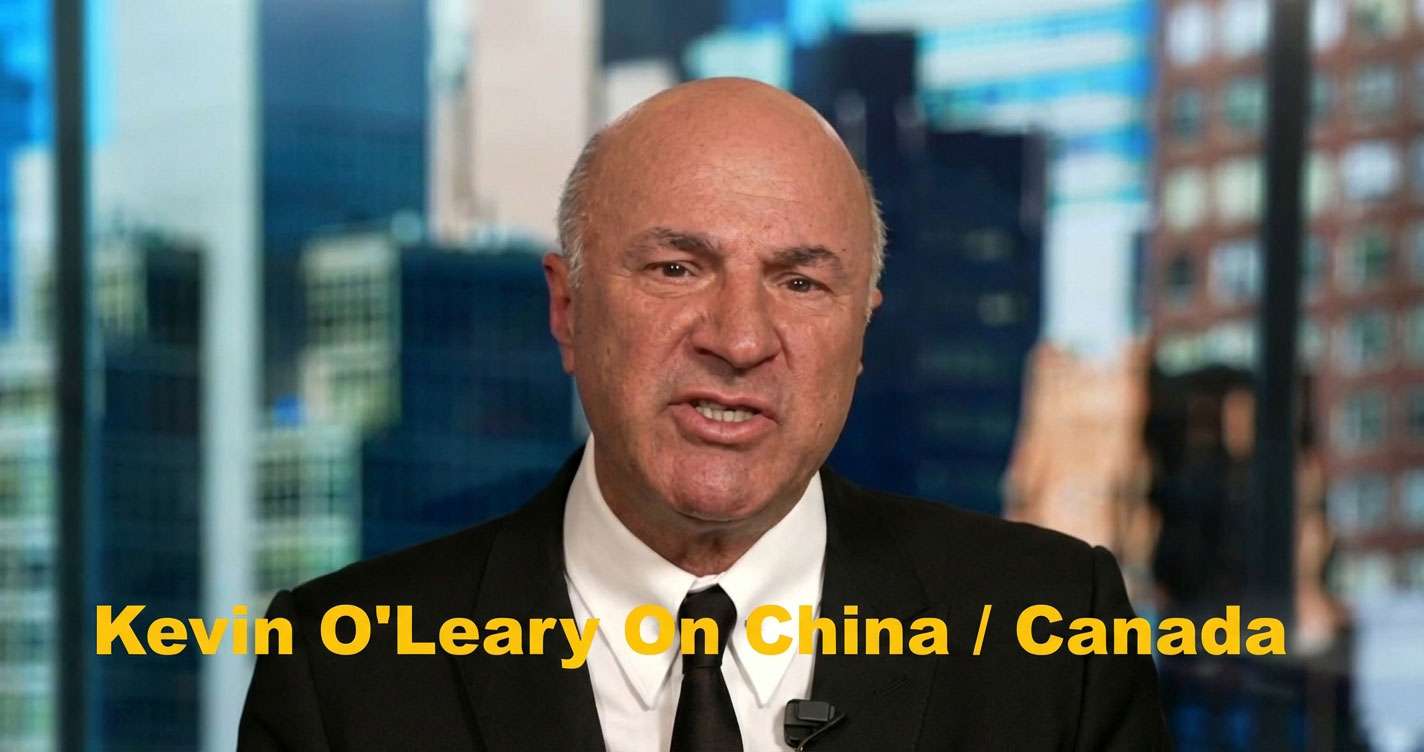
Kevin O’Leary warns Canada against closer ties with China as Trump threatens 100% tariffs
Businessman Kevin O’Leary warned Canada on Fox Business against pursuing closer trade ties with China, citing security and economic risks, as President Trump threatened 100% tariffs if Canada becomes a gateway for Chinese goods into the U.S. market.
- O’Leary: “China is not your friend,” urging Canada to avoid a deep trade deal with Beijing and warning of strategic vulnerabilities.
- Trump: Posted that Canada would be “sorely mistaken” to serve as a gateway and threatened a 100% tariff on Canadian imports.
- Canada: Official Mark Carney denied any plan for a free trade deal with China and said recent tariff cuts were limited to certain sectors.
- Stakes: US‑Canada supply‑chain links make tariffs risky for industries and consumers on both sides of the border.
O’Leary’s warning: “China is not your friend”
Kevin O’Leary, the investor and television personality known from Shark Tank, made his remarks on Fox Business’s The Claman Countdown. He called China an economic, military and AI rival and urged Canada to be wary of any deep trade agreement with Beijing.
“China is not your friend,” O’Leary told host Liz Claman, arguing Beijing has “screwed” many business partners and could do the same to Canada.
O’Leary framed the warning in strategic terms, linking trade ties to national security and citing Beijing’s investments in advanced technologies and expanding military reach as reasons for caution. He emphasized the risk of economic dependence creating strategic vulnerabilities.
Source: Fox Business
Trump’s social media posts and tariff threat
President Donald Trump posted that Canada would be “sorely mistaken” to act as a conduit for Chinese goods into the U.S., warning that “China will eat Canada alive” and threatening a 100% tariff on goods imported from Canada if American officials believe Canadian policy facilitates Chinese access to U.S. markets.
Analysts note that a 100% tariff would represent an extreme escalation, likely disrupting supply chains, raising costs for U.S. consumers and businesses, and affecting a wide range of industries.
Source: Fox Business
Canada’s response
A Canadian official identified in coverage as Mark Carney pushed back, saying Canada does not intend to pursue a free trade deal with China and that a recent agreement cut tariffs only in certain sectors affected by earlier measures. That clarification reduced immediate concern that Ottawa was negotiating a broad pact that could flood U.S. markets with Chinese goods.
The comment was reported in news segments and in Fox Business’s coverage: YouTube video segment and Fox Business.
US‑Canada trade ties and the stakes
O’Leary and Fox Business highlighted how closely integrated the U.S. and Canadian economies are: roughly 70% of Canada’s output goes to 26 U.S. states, and Canada is the top export destination for 36 states. He described the relationship as deeply interwoven—“we’re in love that way financially”—and predicted leaders would ultimately reconcile the dispute.
Trade experts warn that steep tariffs could disrupt automobiles, energy, agriculture and technology supply chains, raise prices, and produce job losses on both sides of the border.
Sources: Fox Business; AOL.
Broader context and security ties
O’Leary linked the trade disagreement to a larger national security picture, referencing proposals such as a continental missile defense posture and noting that cooperation with Canada matters beyond trade—especially on technology, defense and AI.
The debate reflects broader policy tensions: critics warn about technology transfer and geopolitical leverage from expanded trade with Beijing, while supporters argue engagement can reduce the risk of conflict.
Coverage and reaction
Multiple outlets ran O’Leary’s comments and the ensuing spat. Primary coverage and analysis appeared on Fox Business, with related clips on YouTube, coverage by AOL, and a video segment on Fox News.
Implications for Los Angeles, California
Economic impact
- Higher costs: Tariffs on Canadian goods could raise input costs for LA firms in aerospace, tech and food & beverage sectors.
- Ports and logistics: Trade disruptions could increase congestion at the Port of Los Angeles and shift shipping patterns across Southern California.
- Consumer prices: Households may see price increases for items tied to Canadian supply chains, such as lumber and certain groceries.
Political consequences
- Local officials and California’s congressional delegation will likely monitor developments and press for clarity to protect jobs.
- The dispute could become a local political talking point as leaders weigh protectionism against open‑market benefits.
Social effects & cultural relevance
- Job risks for communities tied to cross‑border trade, particularly in logistics, warehousing and manufacturing.
- Debate resonates in LA’s diverse communities with ties to Canada and Asia, affecting civic and business leaders focused on international commerce.
Practical advice for residents
- Small businesses: Review supplier contracts and develop contingency plans if tariffs or delays increase costs.
- Consumers: Expect possible price changes on certain products; local consumer groups may increase outreach.
- Employers: Brief workers on contingency plans and monitor federal trade announcements.
Sources and further reading
Reporting and original coverage cited below:
Reporting from Times Media Service


