
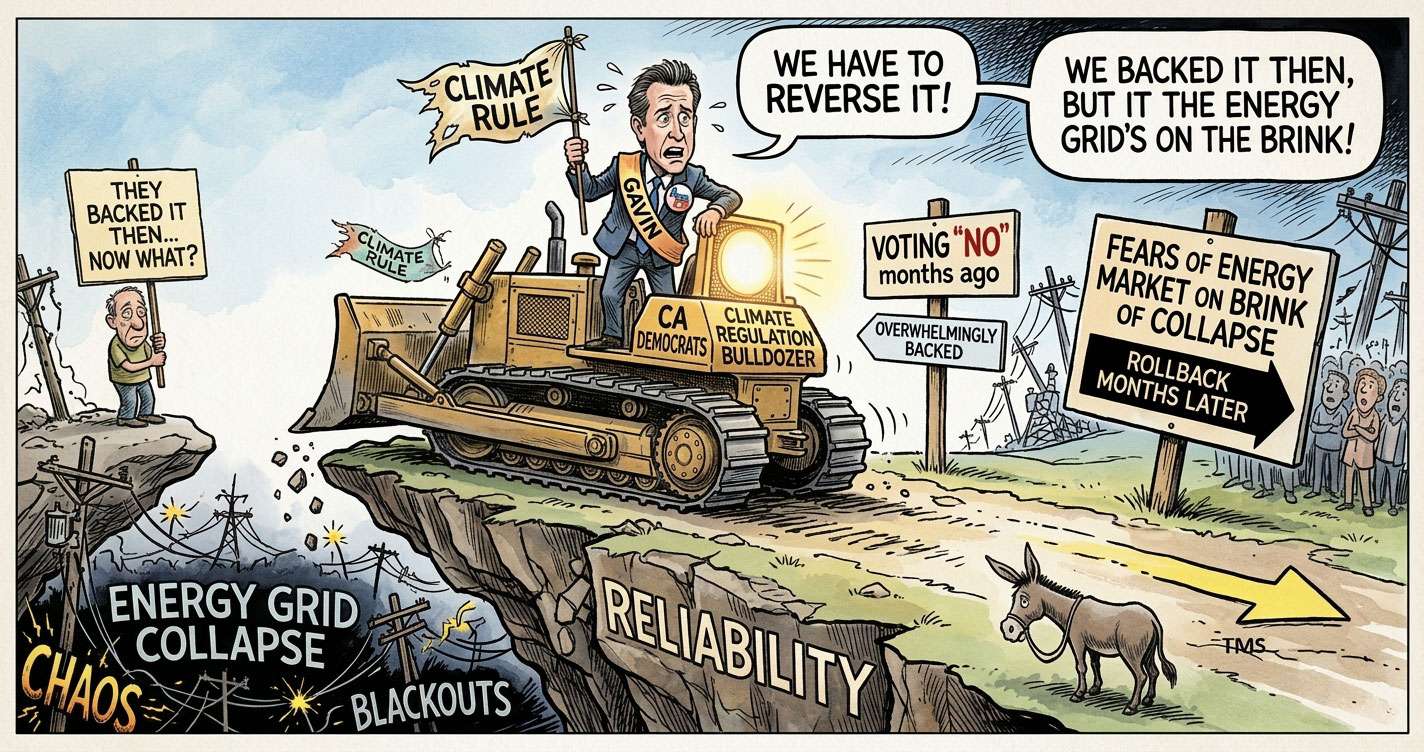
California Democrats who backed cap-and-invest now urge CARB to rethink fuel and power rules, warning of higher prices and supply risks
Fifteen California Democratic Assemblymembers sent a letter on March 10, 2026, to the California Air Resources Board urging reconsideration of proposed cap-and-invest amendments, warning the changes could destabilize energy markets, raise costs, and strain supplies.
Key takeaways
- Fifteen Democratic Assemblymembers who backed the program’s 2025 reauthorization asked CARB to pause proposed amendments affecting fuels, natural gas and electricity.
- CARB plans a May 2026 vote; lawmakers and industry warn stricter limits and fewer allowances could raise costs and pressure supply.
- Industry estimates suggest billions in compliance costs and potential gasoline increases over $1/gal by 2030 under some scenarios.
- Debate highlights tension between meeting climate targets and protecting affordability and energy reliability for vulnerable communities.
Details
Key information
Who: Fifteen Democratic Assemblymembers who voted to reauthorize California’s cap-and-invest program in September 2025. Signers include Blanca Rubio, Michelle Rodriguez, Jose Luis Solache, Stephanie Nguyen, Lisa Calderon, Juan Carrillo, James Ramos, Lori Wilson, Blanca Pacheco, Maggy Krell, Esmeralda Soria, Tina McKinnon, Cecilia Aguiar-Curry, Anamarie Avila Farias and Mike Gipson. (Source: SJV Sun; video briefing.)
What they asked: The lawmakers asked CARB to pause and rethink proposed amendments to rules for fuels, natural gas and electricity, warning the changes could further strain an already stressed energy market and raise living costs. (Source: Carbon Pulse; SJV Sun.)
When: The letter was sent March 10, 2026. CARB is expected to vote on the proposed amendments in May 2026. (Source: Carbon Pulse.)
Why it matters: The updates would tighten emission limits and reduce available allowances through 2030. Industry groups warn this could add costs to refiners, risk domestic supply and push pump prices higher, while CARB says the program remains the most cost-effective path to meet state climate goals.
What the letter says
“This crisis is not a fallacy nor a thinly veiled threat. It is a reality borne by consumers today who are historically and empirically least able to afford it,” the lawmakers wrote, warning that “California’s climate leadership cannot come at the cost of destabilizing our energy markets and burdening those least able to bear it.” (Source: Carbon Pulse; video.)
How the cap-and-invest program works
California’s cap-and-invest program, often called cap-and-trade, places a statewide limit on greenhouse gas emissions. Major polluters must acquire allowances to cover emissions; proceeds fund clean energy projects and programs. The 2025 law reauthorized the program and directed CARB to tighten rules to meet climate targets through 2030. The current CARB proposal would reduce allowances and set stricter emissions limits, particularly affecting fuel and refinery sectors. (Source: video explainer; Carbon Pulse.)
Industry warnings and economic estimates
Energy companies and industry groups warn the CARB amendments could impose billions in compliance costs. Chevron and other refiners say the changes could add significant costs, push some refineries to close or relocate, and raise gasoline prices by more than $1 per gallon by 2030 in certain scenarios. Industry statements link recent gasoline moves — over $0.50/gal in recent weeks amid Middle East tensions and other factors — to heightened consumer pain from additional regulatory costs. (Source: video briefing.)
CARB and administration response
CARB defends the updates as the best tool to meet California’s legally mandated greenhouse gas reductions. Agency officials and the Newsom administration say cap-and-invest is the most cost-effective way to cut emissions at scale while allowing market mechanisms to drive cleaner technology and investments. CARB is engaged in rulemaking and plans to weigh technical and economic analyses before the May vote. (Source: video explainer.)
Political context and the shift among Democrats
The lawmakers’ letter highlights a rare fracture within Democratic ranks: the same 15 Assemblymembers who supported the 2025 reauthorization are now urging a rethink of how quickly and how far CARB tightens rules. Their framing underscores a tension between long-term climate goals and immediate household costs, arguing that a transition that outpaces infrastructure and market readiness could create supply imbalances and instability in energy markets.
Regulatory timeline and the stakes
CARB’s May 2026 vote will be critical. If regulators finalize stricter limits and reduce allowances, refiners and energy providers will face higher compliance costs with potential ripple effects across fuel prices, utility bills and industrial operations. Lawmakers and industry call for more analysis and phased implementation tied to infrastructure readiness; CARB says it is considering modeling and stakeholder feedback through the rulemaking record. (Source: Carbon Pulse.)
Viewpoints from both sides
- Lawmakers: Emphasize protecting working families and avoiding disproportionate harm to lower-income residents; urge CARB to reconsider timelines and mitigation to safeguard reliability and affordability.
- Industry: Warn that stricter rules could accelerate refinery closures, cost jobs and raise gasoline and heating costs; cite modeling showing >$1/gal increases by 2030 in some scenarios. (Source: video briefing.)
- CARB & administration: Maintain cap-and-invest is the most effective policy to meet climate targets while allowing flexibility via market mechanisms; officials will review economic modeling and stakeholder feedback before acting.
What experts say and open questions
Independent analysts note impacts depend on design details: pace of allowance reductions, availability of offsets, investment in clean fuels and electric infrastructure, and the degree to which costs are passed to consumers. Key open questions include how quickly refiners can adapt, whether the state can secure adequate clean energy and fuel supply as demand shifts, and what protections will be implemented for low-income households. CARB’s economic modeling and responses to stakeholders will shape debate ahead of May.
Implications for Los Angeles, California
Economic impact: Los Angeles residents already pay among the nation’s highest fuel and energy prices. Any increase in refining costs or fuel prices could raise gasoline and home energy bills across LA County, squeezing household budgets and increasing costs for businesses that depend on transportation and logistics.
Jobs and industry: LA is tied to California’s petroleum and transportation sectors. Stricter rules that pressure refineries could threaten regional jobs in processing, trucking and distribution, while potentially spurring new clean-energy jobs that require time and worker training.
Energy reliability: LA depends on a complex supply chain for gasoline and electricity. Lawmakers warned that regulations changing faster than infrastructure adapts risk supply imbalances and short-term price spikes at the pump and stress on local grids.
Political and community response: The Assemblymembers’ letter signals growing concern among local officials about immediate economic harm. That could push Sacramento toward compromise measures—phased implementation, targeted rebates or protections for low-income households—to balance climate goals with affordability.
Where the debate goes next
With a CARB vote scheduled for May 2026 and mounting pressure from industry and some Democratic lawmakers, Sacramento is headed for a high-stakes showdown over the pace and design of California’s climate rules. Stakeholders will watch CARB’s economic modeling, the public comment record, and any last-minute compromises that could soften near-term impacts on families and the energy market.
Sources and further reading
- Carbon Pulse: “California Democratic lawmakers urge CARB to rethink cap-and-trade renewal”
- San Joaquin Valley Sun: “Calif. Dem. lawmakers push CARB to rethink cap-and-trade renewal”
- CARB / News briefings and industry statements (video)
- Brief explainer and industry comments (video)
Reporting from Times Media Service.


