
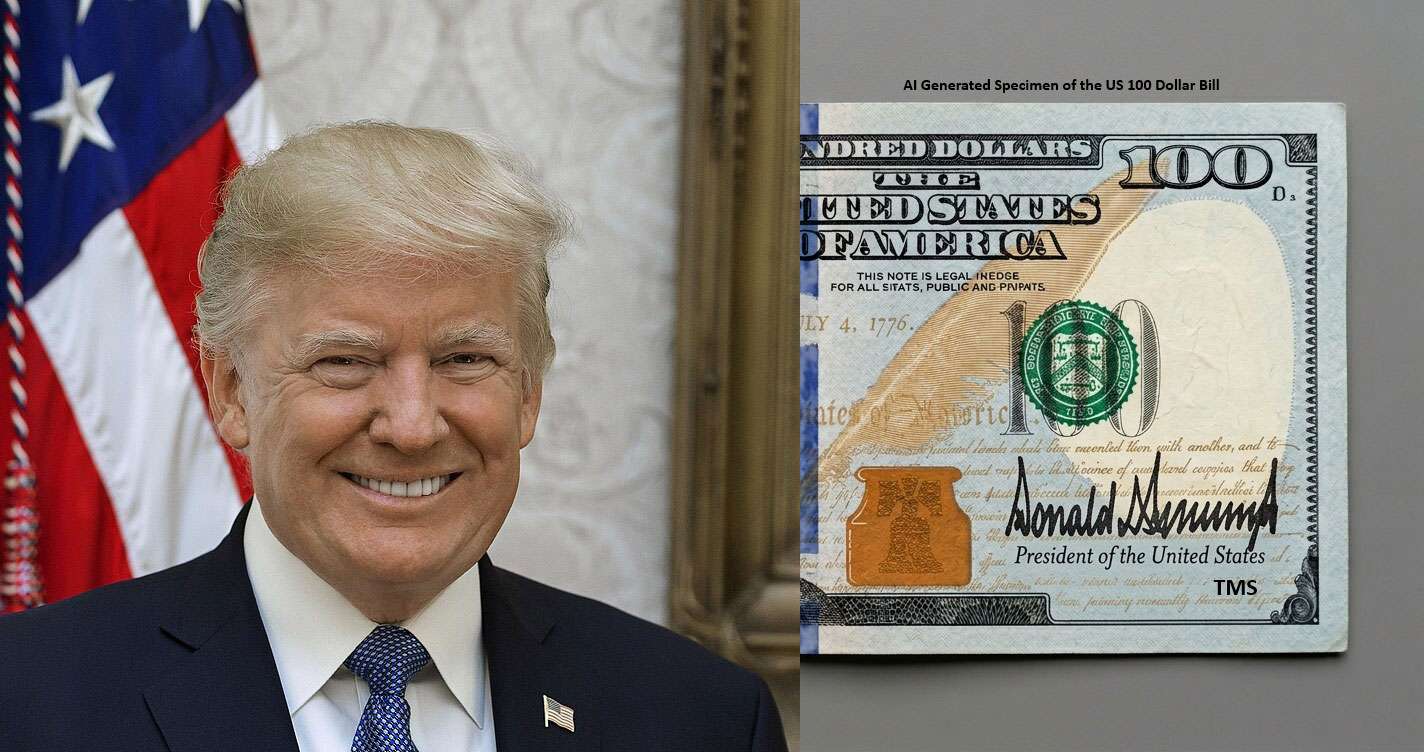
Trump signature to appear on U.S. paper money for 250th anniversary, Treasury says
President Donald Trump’s signature will be added to all newly printed U.S. paper currency to mark the 250th anniversary in 2026, making him the first sitting president to appear on circulating bills; $100 notes expected by June.
Key takeaways
- The Treasury will add President Trump’s signature to new bills to mark the U.S. Semiquincentennial in 2026 — announcement reported by ABC News and CBS News.
- First $100 notes with President Trump’s signature and Treasury Secretary Scott Bessent’s signature are expected in June, with other denominations phased in later — ABC News.
- Signature replaces the Treasurer’s signature on paper money, a change the Treasury called the first of its kind in 165 years (ABC News, CBS News).
- Legal and cultural questions remain about placing a living president’s name on circulating currency; experts say it could invite review (ABC News).
Main content
Placement and timeline
Treasury officials said the change will be phased in as new bills are printed. The initial production run will include the first $100 notes bearing both President Donald J. Trump’s signature and Treasury Secretary Scott Bessent’s signature, slated for production in June; other denominations will follow through the year. This sequence mirrors historical BEP practice when new plates and printing runs introduce updated notes. (Source: ABC News).
Important operational note: the Bureau of Engraving and Printing (BEP) remains in production of notes that carry former Treasury Secretary Janet Yellen and Treasurer Lynn Malerba signatures; currency already in circulation remains legal tender and unchanged in value or status. (Source: ABC News.)
Legal framework and questions
Federal law long bars living presidents from appearing on U.S. currency, a prohibition traditionally understood to apply to portraits and likenesses on circulating paper money. Treasury officials contend that adding a living president’s signature does not fall under that restriction and is therefore legally permissible; the department framed the change as an administrative decision tied to the Semiquincentennial rather than citing a statutory amendment. (Source: ABC News.)
Legal scholars and historians note the move raises novel questions and could invite legal or constitutional review if challenged. The Treasury’s announcement did not publish a legal opinion or court ruling supporting the change; observers point to longstanding norms that have kept living presidents off bills and coins.
Treasury justification and official remarks
“There is no more powerful way to recognize the historic achievements of our great country and President Donald J. Trump than U.S. dollar bills bearing his name, and it is only appropriate that this historic currency be issued at the Semiquincentennial,” Treasury Secretary Scott Bessent said in a statement. (Source: ABC News.)
U.S. Treasurer Brandon Beach also praised the decision, calling it “not only appropriate, but also well-deserved” as recognition of what the Treasury described as an economic revival. (Source: CBS News.)
Related initiatives: coins and commemorative designs
The signature announcement follows other efforts to place President Trump’s image or name on government-issued money. In March, the Commission of Fine Arts approved a final design for a 24-karat gold commemorative coin featuring President Trump’s likeness; other proposals include a $1 coin bearing his image. Supporters argue such items honor a modern presidential legacy; critics say use of living presidents’ images or names blurs long-standing norms. (Sources: ABC News, CBS News.)
During the COVID-19 pandemic, stimulus checks issued while Trump was president included his signature on the notice attached to the payment — a precedent supporters cite as an earlier example of his name on government-delivered funds. (Source: Politico.)
Reporting and comment requests
National outlets noted the Treasury move and sought additional comment. The Treasury’s public release provided rationale but left some operational and legal details open; media outlets such as Fox News Digital reportedly reached out for more information while national reporting summarized the department’s statement. (Source references in prior reporting: ABC News, CBS News.)
Implications for Los Angeles
Overview: Los Angeles — a major cash market with diverse communities and a sizable collector scene — is likely to view the change as both practical and symbolic. Below are localized implications and inferred effects for Angelenos.
Economic impact
- Cash circulation and commerce: New bills will flow into existing cash channels — banks, armored carriers, retailers and vendors — and older notes remain legal tender; merchants should not refuse older notes. (Source: ABC News.)
- Collector market and tourism: Early print runs — especially first-run $100 notes expected in June — may attract collectors, coin shops and memorabilia dealers, potentially boosting small business revenue for specialty sellers.
Political consequences
- Local politics and campaigns: In largely Democratic Los Angeles, the announcement may fuel debate; elected officials and campaigns could use the decision as a talking point for supporters or critics.
- Public response and civic groups: Expect mixed reactions: conservative donors may applaud the symbolic recognition, while civil rights and progressive groups may object to changing long-standing norms about living leaders on currency.
Social effects
- Everyday residents: For many Angelenos, the change will be a curiosity; some cash users may hoard early printing notes as souvenirs or investments, creating short-term local demand at dealers.
- Businesses and banks: Routine updates to training materials may be needed to identify new signatures, but anti-counterfeiting and cash-handling procedures remain unchanged.
Cultural relevance
- Hollywood and cultural institutions: The cultural community may respond with art, commentary, exhibits or satire using national symbols to prompt conversation about norms and symbolism.
- Multicultural communities: Outreach in multiple languages explaining that new bills are legal tender and older notes remain valid may help immigrant and bilingual communities that rely on cash.
Practical applications for Angelenos
- Merchants: Continue accepting older notes; new signature bills will circulate alongside existing currency. (Source: ABC News.)
- Collectors: Those seeking early issues should check local coin shops, auction houses and reputable dealers for uncut or uncirculated examples from initial print runs; expect demand for first-run $100 notes in June.
What remains uncertain
The Treasury did not publish a legal opinion explaining why a living president’s signature differs, legally, from a living president’s portrait. The timeline for other denominations beyond the initial $100 notes remains general rather than specific. How collectors, markets and political groups will react over time is also unclear, and journalists and legal analysts will likely follow developments as new notes enter circulation. (Source: ABC News.)
Reporting credits and sources
This report draws on Treasury Department statements summarized in national reporting and on prior coverage of related coin and signature initiatives. Primary reporting sources include ABC News, CBS News, and Politico.


