
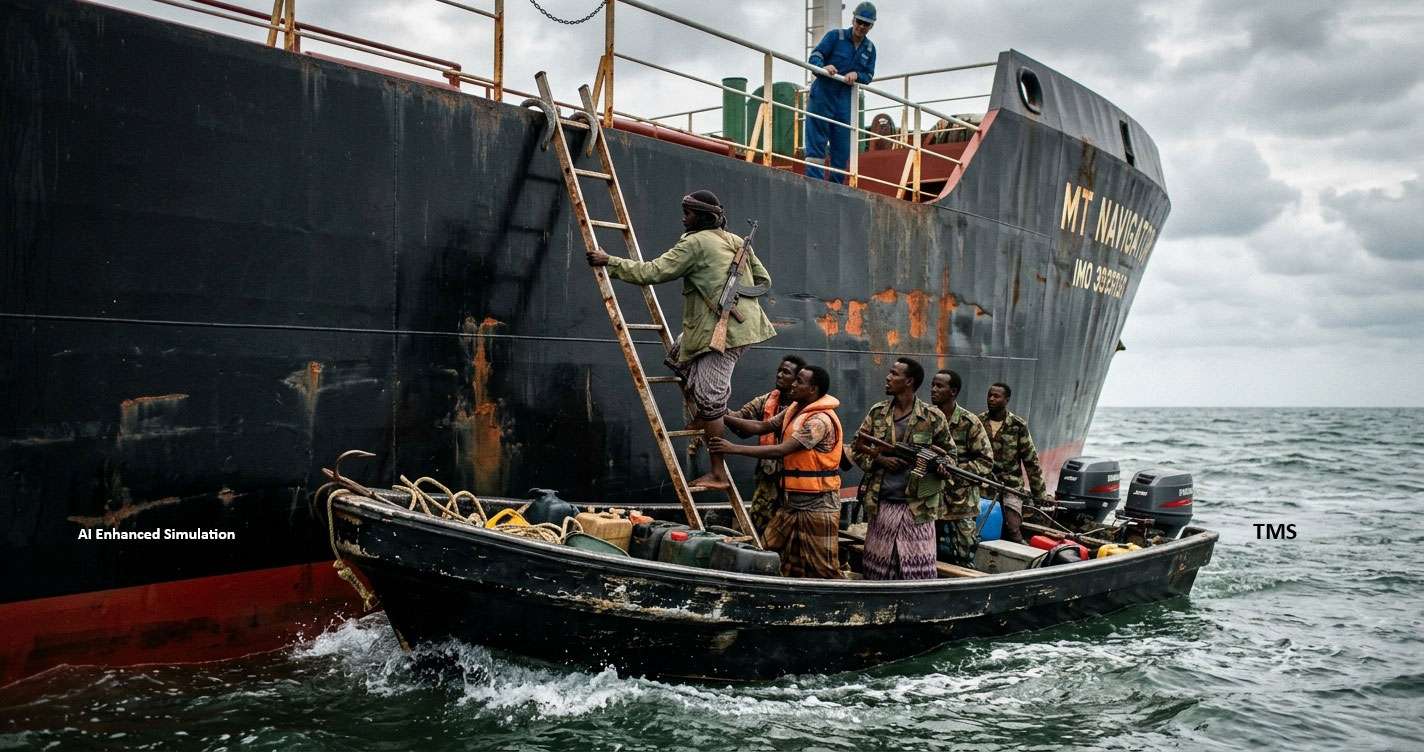
Surge in Somali piracy, Houthi militant alliances fuel fears of Red Sea security vacuum after MT Eureka oil tanker hijack
A resurgence of Somali piracy, highlighted by the May 2, 2026 MT Eureka oil tanker hijack, risks a security vacuum in the Red Sea and Gulf of Aden as analysts warn of opportunistic ties with Iran‑backed Houthi militants.
- MT Eureka hijack: The MT Eureka was seized on May 2; recovery efforts are underway, according to Reuters.
- Risk upgrade: Multiple seizures and attempts since April 21 prompted Windward AI and the U.K. Maritime Trade Operations (UKMTO) to raise the threat level to “substantial.”
- Transactional alliances: Analysts warn Somali pirate groups appear to be coordinating with Houthi-linked actors (Fox News) and security analysts such as RTCOM Defense.
- Drivers: Rerouted oil flows, diverted naval patrols and higher crude prices create a “target‑rich” environment, per EU NAVFOR and MSCHOA.
What happened: the MT Eureka and a wave of attacks
On May 2, Yemen’s coast guard reported armed men boarded and steered the MT Eureka toward the Gulf of Aden after taking control off Shabwa governorate. Reporting shows the vessel has been located and recovery efforts are under way, according to Reuters.
The seizure followed a string of incidents that began on April 21. In about ten days, at least three vessels were seized or redirected: a Somali‑flagged fishing boat, the Palau‑flagged tanker Honour 25 (IMO 1099735), and a general cargo ship taken to Garacad in Puntland. Regional alerts and maritime reporting, including notices from Windward AI and UKMTO, document skiff‑launched boarding operations from long distances offshore.
“The MT Eureka has become a central example cited by analysts warning of a wider pattern.”
Analysts: a revived “Somali model” and Houthi links
Ido Shalev, chief operating officer at RTCOM Defense and a former Israeli naval officer, describes a fundamental shift in maritime dynamics: a return of the “Somali model”—full‑vessel hijackings followed by large ransom demands that cover ship, cargo and crew.
Shalev and other analysts say Somali groups now appear to form transactional partnerships with Iran‑backed Houthi militants: Houthis supply advanced GPS, surveillance and geopolitical cover while Somali networks provide skiffs and boarding crews. This coordination, experts warn, represents a level of cooperation not seen in the region in over a decade (Fox News reporting; RTCOM Defense analysis).
Contributing factors: rerouted oil, distracted navies, higher payoffs
Multiple experts point to three interlocking drivers that make the current moment especially dangerous:
- Rerouted oil flows: Saudi crude redirected through Red Sea ports like Yanbu has moved millions of barrels per day onto routes that were previously less targeted, creating a target‑rich environment (EU NAVFOR).
- Naval distraction: International fleets and task forces have diverted assets to counter Houthi missile and drone activity in the Red Sea, reducing patrols nearer Somalia and enabling skiff‑based groups to operate at extended range (MSCHOA).
- Higher oil prices: Brent crude trading near $115/bbl raises the financial reward for seizing tankers and cargoes, increasing incentive for larger, riskier hijackings (Windward AI analysis).
Warnings from maritime monitors and think tanks
Maritime intelligence providers and security centers have raised alerts. Following the late April–early May incidents, Windward AI and UKMTO classified waters off Somalia as “substantial” risk. The EU’s naval force and the Maritime Security Centre – Horn of Africa (MSCHOA) continue to issue guidance to commercial shipping (EU NAVFOR).
Other analysts link the spike to the broader crisis that began with Houthi strikes on commercial vessels in late 2023. The International Maritime Bureau (IMB) and policy centers documented early signs of piracy returning as naval attention shifted to Houthi threats.
Past solutions and current recommendations
Experts recommend a mix of surveillance, intelligence sharing and coordinated patrols to restore deterrence. Shalev highlights surveillance‑first systems such as Nigeria’s Falcon Eye—credited with driving piracy in the Gulf of Guinea to near zero by enabling authorities to “see the threat before it reaches the ship” (RTCOM Defense coverage).
Maritime insurers and shipping companies are urged to adopt best management practices: careful routing, use of onboard security teams where feasible, and strict watchkeeping. Firms already face higher premiums and longer transit times when carriers reroute around the Cape of Good Hope due to Red Sea threats (Modern Ghana industry alerts).
Sources and alerts used in this report
- Reuters — reporting on the MT Eureka oil tanker hijack
- Windward AI — maritime risk analysis
- U.K. Maritime Trade Operations (UKMTO) — security alerts
- EU NAVFOR — maritime security updates
- Maritime Security Centre – Horn of Africa (MSCHOA) — regional coordination
- International Maritime Bureau (IMB) — piracy reporting
- Fox News — reporting and analyst interviews
- Modern Ghana — timeline of recent vessel seizures
- RFI and other regional outlets — additional reporting and analysis
Implications for Los Angeles, California
Economic impact: Los Angeles, home to one of the world’s busiest ports, is tightly connected to global shipping. A sustained spike in Somali piracy affecting Red Sea transit could raise shipping costs and insurance premiums, increasing import prices and slowing deliveries that transit the Suez Canal and Red Sea.
Energy markets: The U.S. West Coast is exposed to global oil fluctuations. Disruptions in Red Sea shipping and rising Brent crude could push up refined fuel costs locally; Los Angeles consumers may feel higher gas prices and increased transport-related costs.
Supply chain and ports: Container traffic at the Port of Los Angeles and Port of Long Beach could be delayed or rerouted. Longer voyages around the Cape of Good Hope add days or weeks to transit times, affecting just‑in‑time operations and raising warehousing expenses.
Political and security considerations: The U.S. government and allies may increase naval patrols or intelligence efforts to protect trade lanes, prompting policy debates over federal resources, port security, and coordination with private industry in California.
Social effects: Households, particularly low‑ and middle‑income families, may face higher fuel and grocery costs. Small businesses operating on thin margins are vulnerable to shipping delays and logistics cost increases.
Practical steps for Los Angeles residents and businesses
- Port operators and shippers should review contingency plans and communicate expected transit times with carriers.
- Businesses reliant on imports should consider diversifying suppliers and building inventory buffers where feasible.
- Consumers can prepare for short‑term price volatility by budgeting for potential fuel and food cost increases.
Reporting remains active as recovery efforts for the MT Eureka continue and international monitors track further incidents in the Red Sea and Gulf of Aden (Reuters; Windward AI; UKMTO). Journalists and analysts emphasize that restoring a steady naval presence and improving surveillance will be key to preventing a wider return of Somali piracy (EU NAVFOR; MSCHOA).


