
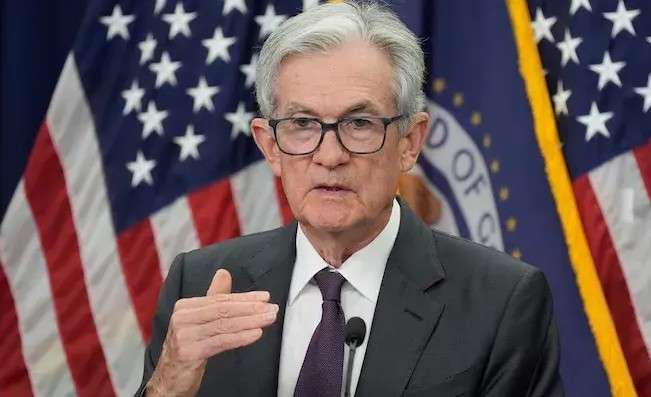
Fed cuts interest rates in September 2025 as labor market weakens, even with inflation still above target
The Federal Reserve cut interest rates in September 2025—the first reduction since December 2024—as payroll growth stalled for months. The move aims to protect employment amid a weakening labor market despite inflation remaining above the 2% target.
Key takeaways
- The Fed lowered its benchmark rate in September 2025 amid a slowing labor market; see the Federal Reserve press release.
- Reports conflict on the cut’s size: outlets vary between a 25‑basis‑point move to 4.00%–4.25% and a 50‑basis‑point cut to 4.75%–5.00%; see Trading Economics and CBS News reporting.
- Fed emphasized uncertainty: officials said inflation is closer to target but downside risks to jobs remain; read the official statement.
- Further easing signaled: markets and Fed projections point to additional cuts before year‑end and into 2026 (see Trading Economics).
Key information
The Federal Reserve moved to lower its benchmark federal funds rate in September 2025 amid signs of a slowing labor market; see the Federal Reserve press release. Reported size of the cut varies across outlets — Trading Economics and CBS News provide differing figures. The Fed said it is more confident inflation is moving closer to target but stressed continued uncertainty about the outlook and downside risks to jobs.
Why the Fed acted: labor market softening vs. stubborn inflation
The decision reflected a clear trade‑off: payroll gains have averaged under 100,000 per month for four months, signaling a notable slowdown in hiring (see Trading Economics). Policymakers emphasized they are watching job growth closely because sustained weakness could spill into broader economic pain.
At the same time, inflation has not fully returned to the Fed’s 2% goal. The latest readings put inflation near 2.9% in August, indicating disinflation has slowed (see Trading Economics). The Fed balanced its dual mandate — maximum employment and price stability — stressing uncertainty about the outlook and the need to weigh risks to jobs and inflation in its statement (see the Federal Reserve press release).
“We are seeing growing confidence that inflation is moving closer to target, but uncertainty remains about the economic outlook and downside risks to jobs.”
Conflicting reports on the size of the cut
Media outlets reported different sizes for the rate cut. Some reported a 25‑basis‑point move to 4.00%–4.25%, while others reported a 50‑basis‑point reduction to 4.75%–5.00%. Differences may reflect varying interpretations of the Fed’s language or market pricing updates — see Trading Economics and CBS News reporting. The Federal Reserve’s official press release provides the authoritative language on the committee’s decision.
Dissent and internal debate at the Fed
The vote was not unanimous. At least one official dissented from the smaller cut and advocated for a larger reduction (reports note a vote against the 25bp option in favor of 50bp; see Trading Economics). That split underscores internal tension between officials prioritizing inflation restraint and those urging faster easing to protect jobs.
What markets and forecasters said
Markets reacted quickly, repricing expectations for further easing this year after the move. The Fed’s updated projections suggested additional cuts could arrive before year‑end and into 2026 (see Trading Economics). The central bank also revised GDP forecasts higher for 2025–2027, indicating some confidence in the outlook even as labor‑market risks persist.
Consumer and business effects
Lower policy rates should eventually reduce borrowing costs for consumers and businesses — potentially easing mortgage, auto loan, credit card, and business borrowing pressures that rose during prior hikes (analysis by CBS News).
But relief may not be immediate. Mortgage rates depend on long‑term bond yields and lenders’ risk assessments. If inflation stays above target, lenders could keep rates higher for longer. Economists warn that one or two cuts may not fully reverse higher borrowing costs without clearer progress toward price stability (see Trading Economics).
Policy outlook: more easing expected, but risks remain
The Fed signaled a path for additional reductions — roughly 50 basis points by year‑end and another quarter‑point in 2026, according to market trackers and projections (see Trading Economics). That path is conditional on incoming jobs, inflation, and financial data. If labor weakness continues and inflation cools, easing may continue; a rebound in inflation could prompt a pause.
Implications for Los Angeles, California
Economic impact: Los Angeles households and businesses could see gradual relief from the Fed’s cut. Mortgage and auto loan costs may edge down over time, easing monthly payments for some homeowners and buyers and providing modest support to consumer spending and small‑business lending (analysis: CBS News).
Labor market and jobs
A Fed shift to protect employment aims to prevent deeper job losses. In Los Angeles — with large tourism, entertainment, construction, and service sectors — slower hiring or layoffs would be central concerns. If Fed easing sustains consumer spending, local service employers could stabilize hiring. City officials should prepare for a modest rise in unemployment consistent with Fed projections (see Trading Economics).
Political consequences
Local and state leaders may face pressure to respond with policies supporting workers and small businesses. In Los Angeles, officials could bolster job‑training programs, unemployment assistance, and targeted supports for vulnerable sectors.
Social effects
Lower‑wage workers may feel the pinch first if job gains slow, increasing demand for safety‑net services, food assistance, and housing support in a city with high living costs. Nonprofits and community groups may see more requests from gig workers and hospitality employees.
Cultural relevance
Economic anxiety can affect attendance at entertainment venues dependent on discretionary spending. Conversely, lower borrowing costs could spur home improvement and consumer purchases that support local artisans, small theaters, and restaurants.
Practical applications for residents
- Homeowners: Those with adjustable‑rate mortgages might see slightly lower payments, depending on lenders and long‑term yields (see CBS News).
- Renters: Any rent impact will be slow; lower mortgage rates could modestly affect demand and rents in desirable neighborhoods.
- Job seekers: Watch hiring in tourism, construction, and entertainment. City job centers and workforce programs may offer help.
- Small businesses: Evaluate borrowing plans and shop for loan terms as lenders adjust; financing costs may ease gradually.
Reporting and follow‑up
City officials, lenders, and employers will monitor national jobs and inflation data closely. For Los Angeles residents, the Fed’s move signals policymakers see rising job risks and are willing to ease policy to support employment. The speed at which relief reaches households depends on local lending practices, inflation trends, and job growth stabilization (see the Federal Reserve press release and Trading Economics).


