
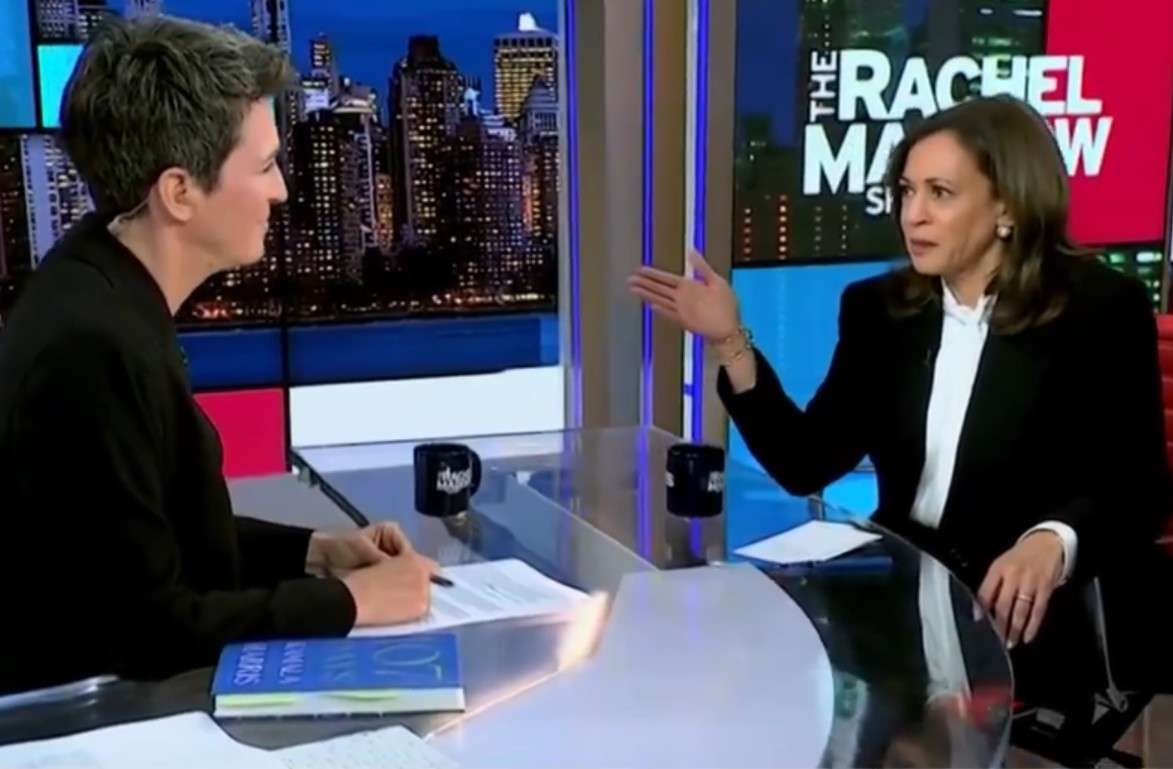
Harris labels Trump a “tyrant,” scolds “feckless” CEOs; interview precedes release of new book 107 Days
In a post-election interview with Rachel Maddow, Kamala Harris called Donald Trump a “tyrant,” condemned “feckless” CEOs for capitulating to him, and tied the warnings to the release of her memoir 107 Days recounting her sudden nomination.
Key takeaways
- Harris called Trump a “tyrant” and compared his conduct to that of communist dictators; she framed it as a warning about eroding democratic norms (Source).
- She criticized CEOs as “feckless” for silence or accommodation, arguing corporate capitulation undermines both political norms and economic stability (Source).
- Capitalism and democracy are linked, Harris warned that markets rely on functioning institutions and civic guardrails (Interview clip).
- The interview coincided with her memoir release, 107 Days, recounting her rapid ascent after President Biden’s withdrawal (Source).
Main content
Harris calls Trump a tyrant
In an hourlong conversation with Rachel Maddow, Harris used stark language to describe former President Donald Trump. She said,
“We used to compare the strength of our democracy to communist dictators. That’s what we’re dealing with right now under Donald Trump.”
She explicitly labeled him a “tyrant”, drawing a direct comparison to authoritarian leaders and framing the comment as a civic warning (Source; Full interview clip).
Harris elaborated that Trump’s conduct — from using government power in ways she says punish critics to favoring personal whims — stems from a fragile ego and risks turning institutions into tools of a single leader rather than checks on power (Source).
Critique of business leaders: “feckless CEOs”
Harris did not spare corporate leaders, calling many “feckless” for choosing silence or pragmatic accommodation over principle. She said,
“One by one by one, they have been silent. They have been, you know, yes, I use the word feckless.”
She dismissed the idea that billionaires stayed quiet purely out of fear of losing luxury, ridiculing suggestions that they would lose a yacht or a house in the Hamptons for speaking out. Harris argued that protecting democracy should outweigh short-term business interests (Source).
Democracy and capitalism: linked systems, Harris argues
A central theme was Harris’s contention that capitalism thrives only within a functioning democracy. She warned that when business leaders abandon their role as institutional defenders, both political systems and markets suffer: “Democracy sustains capitalism. Capitalism thrives in a democracy.” (Interview clip; Source).
She urged corporate boards, universities, the news media and other institutions to act as guardrails for our democracy, warning that without them a leader focused on consolidating power could erode protections needed by businesses and citizens (Source).
On authoritarian warnings and institutional responsibilities
Harris framed the federal government’s use to reward allies and punish critics as a pattern that should alarm both business leaders and the public. She presented the critique as more than partisan rhetoric — a test of whether institutions will defend their integrity and norms (Source).
Her remarks echo past criticisms; she has previously likened Trump-era rhetoric to autocratic language, including a 2020 reference to threats to use the military against protesters as “the words of a dictator.” (Archive clip).
The timing: a book launch and a wider message
The Maddow interview aired the day before the publication of 107 Days, Harris’s memoir about stepping in as the Democratic nominee after President Biden stepped down. The book recounts the abrupt campaign scramble and the final months of a contentious election. Harris used the platform both to promote the memoir and to emphasize themes about democratic norms and institutional responsibility (Source).
Media coverage and reactions
News outlets and social media quickly amplified the “tyrant” label and Harris’s critique of corporate leaders. Coverage ranged from straight reporting to opinion pieces debating whether the rhetoric would deepen polarization or compel institutions to take clearer stands. The Maddow interview segment and related coverage have been widely circulated online (Fox News video excerpt; YouTube clip).
Implications for Los Angeles, California
Economic impact: Los Angeles hosts major corporations, tech firms, studios and startups. Harris’s call for CEOs to act as civic guardrails speaks directly to LA business leaders. Executives who remain neutral may face pressure from employees, customers and investors — affecting hiring, partnerships and consumer choices, especially in entertainment and tech.
Political consequences: Los Angeles County’s civic leaders may feel renewed pressure to defend democratic norms, from voting access to public accountability. Harris’s remarks could influence local fundraising, endorsements and the tone of municipal and state races.
Social and cultural effects: Many Angelenos work in sectors influenced by corporate stances. The critique could empower employee activism, spur unions and advocacy groups to press companies on civic issues, and prompt cultural leaders to weigh in on institutional responses.
Practical applications: Voters might demand clearer positions from local business leaders; civic groups could ramp up voter education and turnout drives; companies may adopt clearer political engagement policies, affecting employee relations and consumer trust.
Sources and further reading
- Fox News coverage of the interview: “Harris calls Trump a tyrant, lambasts feckless CEOs for capitulation”
- Fox News video excerpt from the interview
- Full interview clip on YouTube
- Harris 2020 clip referenced for historical context
Reporting note: The interview aired on MSNBC with Rachel Maddow. Quotes and themes above are drawn from the recorded segment and subsequent news coverage cited in the sources above.


