
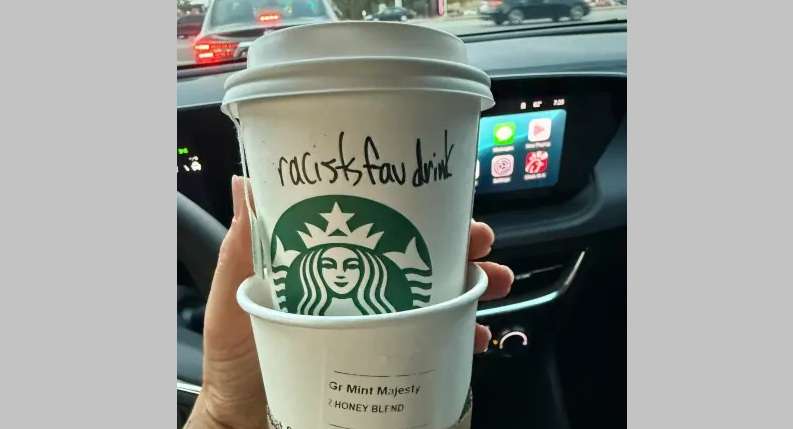
Middletown customer orders Charlie Kirk’s Starbucks drink and finds “racist’s fav drink” on cup; employee fired
A Middletown, Ohio, Starbucks customer discovered “racist’s fav drink” written on her cup after ordering Charlie Kirk’s mint majesty with two honeys, triggering the employee’s firing and statements from Starbucks and Kroger amid national attention.
Key takeaways
- Customer: Autumn Perkins received a cup labeled “racist’s fav drink” after ordering Charlie Kirk’s signature mint majesty with two honeys; she returned the cup and spoke with store management.
- Store: The incident occurred at the Starbucks inside a Kroger in Middletown, Ohio; Kroger operates that Starbucks under license and confirmed the employee was terminated.
- Corporate response: Local12 and Fox News report Starbucks and Kroger condemned the message and noted company policies against hateful or political messages on customer items.
- Community reaction: Perkins said she will boycott Starbucks and urged greater civility in public interactions.
What happened at the Middletown Kroger Starbucks
Sunday evening: Perkins ordered a mint majesty tea with two honeys — a drink widely shared online as Charlie Kirk’s signature Starbucks order. When she received the cup she noticed handwriting along the side that read “racist’s fav drink.” She told local reporters she was stunned and upset.
Perkins returned to the counter and spoke with store management. She said the employee admitted to writing the message; Kroger confirmed the worker was immediately terminated. Local reporting indicates there was no physical altercation or injury. The story gained swift attention after Perkins posted about the incident and spoke with media outlets.
Corporate and public statements
Starbucks reiterated that its stores — including licensed locations — are expected to be welcoming, and that negative, political or hateful messaging on customer orders violates company policy. Kroger, which operates the in-store Starbucks under license, confirmed the employee was fired and said the conduct did not reflect company values.
Why the incident drew attention
The message explicitly tied a partisan public figure’s name to a derogatory label, which amplified the story on social media and national outlets. Observers noted that customers expect neutrality and professionalism in retail-service interactions; incidents that appear politically motivated can quickly generate broader discussion about workplace behavior and free expression.
Customer reaction and community response
Perkins told reporters she will boycott Starbucks and encouraged family members to do the same. She urged “greater civility in public interactions”, saying:
“We don’t have to agree on everything, but we respect each other. We can’t communicate and grow if we’re disrespecting each other.”
The incident prompted online debate about employees’ responsibilities in public-facing roles and how employers should handle political or personal expressions at work.
Policy context: licensed Starbucks locations and company rules
The Starbucks inside the Middletown Kroger operates under a common license agreement used in grocery-store partnerships. While licensed locations follow Starbucks branding and menus, human-resources and employee oversight typically fall to the licensee — here, Kroger. Both companies pointed to policies prohibiting hate speech or political targeting in customer interactions; Kroger’s rapid termination of the employee underscores its stance that such conduct is unacceptable.
Reporting and verification
This account is based on local and national reporting. Primary sources include coverage and interviews by the following outlets:
Broader conversation: service work and political polarization
Service workers often must serve customers with diverse and strongly held political views. Incidents like this raise questions about employee training, workplace policies on personal expression, and enforcement of rules designed to keep public-facing environments neutral. Employers balance employee free-expression concerns with customer-service expectations and anti-harassment rules; the swift action in this case reflects an effort to limit harm and maintain a consistent customer experience.
Implications for Los Angeles, California
Economic: Los Angeles — a major market for Starbucks and grocery partnerships — may see increased emphasis on staff training to prevent similar publicity risks and customer loss.
Political & social: The episode contributes to national conversations about polarization in public spaces. Local leaders and community groups in L.A. might call for civility campaigns or employer-led training emphasizing nondiscrimination and respectful customer service.
Cultural: The connection between a public figure and an everyday purchase underscores how politics and pop culture intersect in consumer behavior; businesses in media-centric cities may prioritize sensitivity training for staff.
Practical applications for residents and employees
- Customers who witness similar conduct should report it to store management or corporate customer-service lines.
- Employers with licensed locations may increase visible signage or training about respectful conduct and complaint processes.
- For employees, the incident highlights professional risks of placing personal opinions on customer items and the importance of following company policies.
Reporting note
This article preserves facts reported by local and national outlets, including direct reporting from WKRC Local12 and statements covered by Fox News, Meaww, and Ground News for verification.


