
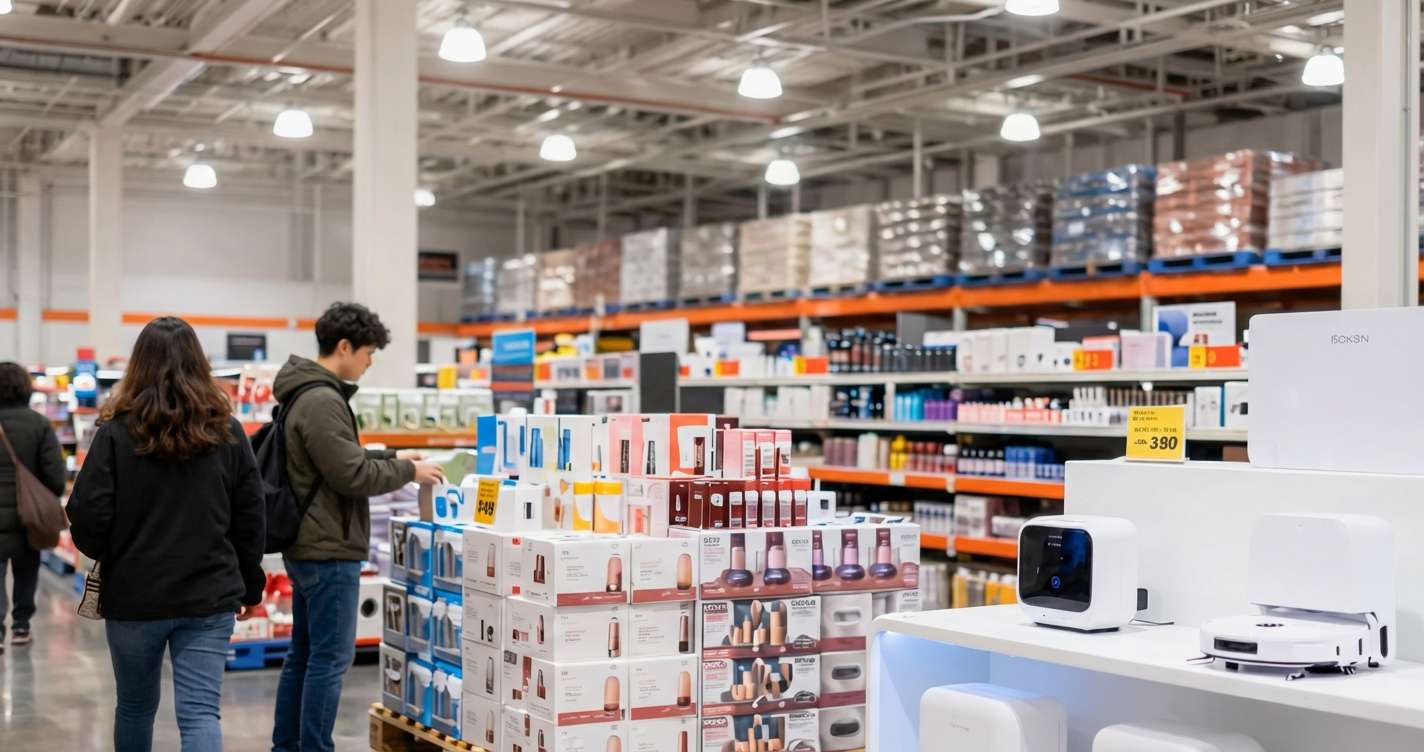
Costco to open full-size Los Angeles warehouse under 800-unit apartment complex in Baldwin Village — a first under AB 2011
South Los Angeles will gain an 800-unit apartment complex built above a full-size Costco warehouse in Baldwin Village, a first approved under California’s AB 2011; Thrive Living plans a 2027 opening with significant affordable housing.
Key takeaways
- Mixed-use prototype: An ~185,000 sq. ft. Costco will sit beneath ~800 apartments at 5035 Coliseum Street in Baldwin Village/Baldwin Hills.
- Affordability set-aside: 184 units (~23%) targeted at 30%, 50% and 80% of AMI; the remainder marketed as workforce housing.
- First under AB 2011: The project is the first Los Angeles development approved under California’s AB 2011 streamlined rules.
- Private financing model: Thrive relies on a long-term Costco lease to cross-subsidize affordability without low-income housing tax credits.
Project overview
Site: 5035 Coliseum Street in Baldwin Village/Baldwin Hills, just north of LAX. Sources reporting the location and project details include Fox Business, Housing Finance and Entrepreneur.
Scale and components: Thrive Living will build roughly 800 apartment units above a full-size Costco warehouse of about 185,000 square feet. The scheme includes a rooftop pool, fitness center and two levels of underground parking that serve both residents and the retail operation.
Timeline: Groundbreaking occurred in September 2024; construction is expected to last about 2–2.5 years with an opening targeted in early 2027 (Housing Finance; Multifamily Dive; Fox Business).
A new model for dense cities
Costco is experimenting with denser formats as it seeks growth in urban areas where its traditional 25‑acre footprint is not available. CEO Ron Vachris described the Baldwin Village plan as a “creative” way to reach members and relieve congestion at busy warehouses (Fox Business).
“A creative way to reach members,” said Ron Vachris on Costco’s Q1 fiscal 2026 earnings call.
Thrive Living positions itself as a developer that identifies underused urban parcels and stacks housing over retail to maximize land use and provide steady rental income that supports affordability.
Affordability details and financing approach
Unit mix: Of ~800 apartments, 184 units (about 23%) are reserved for low-income households with rents targeted to 30%, 50% and 80% of AMI. The remaining ~616 units are intended as non-subsidized affordable or workforce housing—serving households near 120%–150% of AMI (Housing Finance).
Financing model: The project is privately financed; Thrive states that a long-term lease with Costco provides predictable income, enabling lower rents without relying on low-income housing tax credits. Industry reporting frames the retail lease as a cross-subsidy that makes affordability feasible in a high-cost market (Housing Finance; Multifamily Dive).
Estimated cost: Reporting cites a development cost of roughly $425 million (Fox Business).
Policy and approvals: AB 2011 development
The Baldwin Village plan is the first Los Angeles project approved under California’s AB 2011 (Affordable Housing and High Road Jobs Act). Effective July 1, 2023, AB 2011 permits streamlined, ministerial approval for qualifying affordable multifamily housing in certain commercial zones when projects meet labor and affordability requirements (Entrepreneur; Multifamily Dive).
Design, operations and site logistics
Design choices: The project uses two subterranean parking levels and a larger-than-average Costco floor plate (~185,000 sq. ft. vs. the U.S. average of ~146,000 sq. ft.) to preserve Costco’s full product mix while allowing vertical housing above (Entrepreneur).
Operational questions: Planners and neighbors will watch how deliveries, traffic, loading zones, parking and noise mitigation are designed to protect residential life while enabling a high-volume retail operation.
Jobs, neighborhood context and community benefits
Employment: Construction is expected to create thousands of jobs; the Costco store could support roughly 400 permanent positions when open, with Thrive reporting that Costco often hires locally (Entrepreneur; Housing Finance).
Local impacts: Baldwin Village/Baldwin Hills is an area with higher poverty rates and pressing housing needs. Supporters contend the project brings retail access, jobs and new homes to a part of South LA that has seen limited large-scale retail investment.
Broader trends and replication potential
Industry analysts position this as a potential template for other dense cities: stacking housing above big-box anchors can unlock revenue streams that accelerate housing production. The case also demonstrates how state policy tools such as AB 2011 can shorten approval timelines for qualifying projects (Multifamily Dive; Entrepreneur).
Open questions: Will the private financing model scale elsewhere? Can long-term affordability be sustained without public subsidies? How will urban design resolve traffic and delivery challenges under residential structures? These are central issues for planners, residents and policymakers.
Implications for Los Angeles
- Economic impact: The $425 million investment could boost construction employment and local commerce, while creating hundreds of permanent retail jobs (Entrepreneur; Fox Business).
- Political consequences: As the city’s first AB 2011 project, its outcomes may influence whether Los Angeles pursues similar commercial-to-housing conversions or tightens local oversight.
- Social effects: With 184 low-income units and hundreds of workforce units, the development may reduce housing burdens and improve retail access for neighborhood residents (Housing Finance).
- Practical applications: The project will test deliveries, parking, traffic flow and noise mitigation in a residential-over-retail prototype that planning and transit agencies will need to coordinate on.
City partners and public statements
The Housing Authority of the City of Los Angeles is a partner on the project. Mayor Karen Bass highlighted the development at the groundbreaking as an example of public–private collaboration to address the city’s housing shortage (Housing Finance).


