
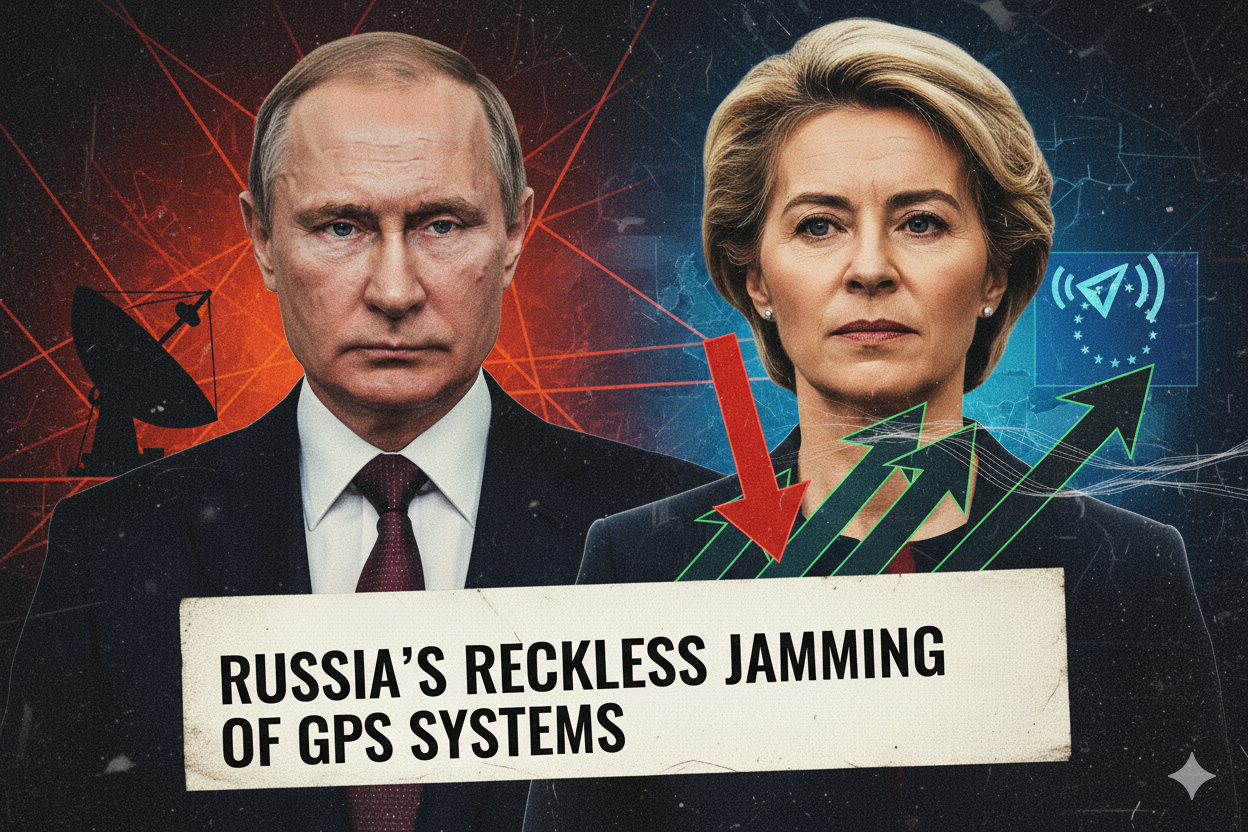
Europe’s GPS Under Fire: Russian Jamming Near NATO Fringes Threatens Aviation and Critical Links, Including von der Leyen Plane Jamming
Russian forces are blamed for escalating GPS jamming across the Baltic, Black Sea and border regions, threatening civil aviation, critical infrastructure and high-profile flights — including European Commission President Ursula von der Leyen’s plane — since 2022.
- Persistent GPS interference has been recorded near the Baltic, Black Sea and borders with Russia and Belarus since 2022 — a pattern analysts link to Russian electronic warfare activity (Euronews).
- High-profile disruptions include GPS problems on Ursula von der Leyen’s plane in Bulgarian airspace (Aug–Sep 2025) and on the UK Defence Secretary’s aircraft near Kaliningrad in 2024 (Euronews; Ukrainian World Congress).
- Responses ramping up: EU and NATO members are investing in GNSS resilience, alternative navigation systems and intelligence sharing to mitigate risk (Air & Space Forces; Euronews).
What is happening: incidents and patterns
Since Russia’s invasion of Ukraine in 2022, European authorities have logged repeated episodes of GPS interference concentrated near the Baltic Sea, the Black Sea and along borders with Russia and Belarus. The interference often spikes near busy airports and over international routes used by NATO officials and allied flights, according to reporting and official statements (Euronews).
Major incidents: In August and September 2025 the plane carrying European Commission President Ursula von der Leyen suffered navigational signal disruption while in Bulgarian airspace. Bulgarian authorities strongly suspect the interference came from Russian sources; NATO described the situation as a “grave danger.” Video and official briefings amplified concerns about civilian flight safety (Euronews; Ukrainian World Congress; video).
Earlier reporting documents a 2024 episode near Kaliningrad that impacted the UK Defence Secretary Grant Shapps’ plane. These high-profile cases have turned technical signal interference into both a safety issue and a diplomatic flashpoint (Euronews).
How GPS jamming works and who may be responsible
Electronic warfare systems can block (jam) or spoof GNSS signals — including the U.S. GPS and Europe’s Galileo. Jamming overwhelms the receivers with noise; spoofing feeds false position or timing data. Targets range from military systems to commercial aircraft, ships and everyday devices that rely on satellite timing and position (Euronews; Air & Space Forces).
Security analysts: Locations such as Kaliningrad and positions along the Baltic and near Ukraine host equipment capable of wide-area jamming. Some incidents may be unintended “spillover” from counter-drone operations; others show timing and scale consistent with coordinated hybrid tactics aimed at pressuring allies.
Risks to flights, infrastructure and everyday services
Pilots and air traffic controllers have reported unreliable navigation signals, raising the risk of errors during approaches and busy airspace operations. Civil aviation is the sector most visibly affected, but risks extend to:
- Ports and maritime navigation in narrow channels;
- Power grids and networks that rely on precise satellite timing;
- Emergency response coordination and logistics chains dependent on GNSS-based routing and scheduling (Euronews; Air & Space Forces).
Attribution and debate among experts
Attributing specific jamming events is technically difficult. Some officials view the pattern as strategic hybrid aggression—carefully calibrated to damage allied systems without triggering kinetic responses. Others, including the Hybrid Centre of Excellence in Finland, urge caution: incidents can be unintended or collateral from military operations. NATO and EU members are expanding intelligence-sharing to better trace and attribute signals (Air & Space Forces).
European responses and steps to limit harm
European governments and NATO allies are taking multi-layered steps:
- Harden receivers: Upgrades and anti-jam technology for GNSS equipment.
- Alternative navigation aids: Investment in ground-based radio navigation and greater use of Galileo backups.
- Electronic defenses and diplomacy: Improved electronic warfare capabilities, intelligence cooperation and diplomatic pressure to deter interference (Euronews; Air & Space Forces).
Implications for Los Angeles, California
Though the activity originates thousands of miles away, global GNSS disruption can have direct local effects on Los Angeles’ ports, airports and industries.
Economic impact
The Port of Los Angeles and Port of Long Beach rely on satellite navigation for ship routing, truck dispatch and precise timing. Disruption could slow imports, raise costs, delay air cargo at LAX and strain supply chains that regional businesses depend on.
Political consequences
High-profile incidents like the von der Leyen plane jamming may push U.S. federal and California leaders to press for stronger GNSS resilience efforts and closer coordination among FAA, DHS, DoD and private operators.
Social effects
Commuters and travelers could face delays; emergency services that depend on GPS-backed timing and routing would need robust backups. Local agencies and residents may demand clearer contingency plans and investments in redundancy.
Cultural relevance
Los Angeles’ film, television and tech sectors use drones and GPS-based systems for production. Jamming that impairs drone navigation or timing could disrupt shoots, raise insurance costs and alter aerial filming practices.
Practical applications for residents and local agencies
- Airports and airlines: LAX and carriers should review GPS outage procedures, increase use of instrument-based and ground navigation aids, and run degraded-navigation training exercises (Euronews).
- Ports and logistics: Test alternative navigation and timing systems; strengthen contingency routing for truck and ship movements.
- Emergency services: Audit GPS dependencies, adopt redundant timing sources and alternative dispatch methods.
- Businesses and residents: Have fallback plans for delivery, tracking and scheduling systems that rely on GNSS.
What to watch next
The pace of investments in GNSS resilience, intelligence sharing and diplomatic pressure will determine whether incidents remain disruptive or escalate into a wider crisis. NATO and EU warnings after the von der Leyen disruption have increased pressure for coordinated action and clearer rules on electronic interference. For Los Angeles, the key takeaway is that global navigation security is a local resilience priority (Euronews; Air & Space Forces; Ukrainian World Congress).
Sources: Euronews; Air & Space Forces; Ukrainian World Congress.


