
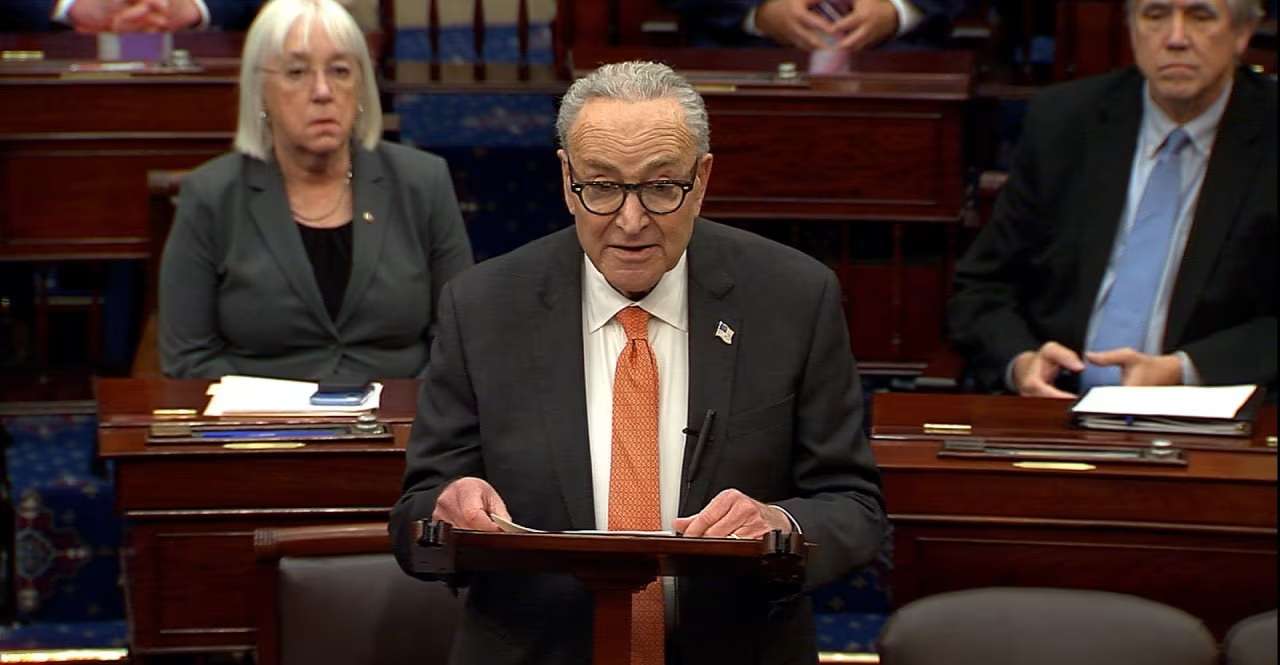
Schumer unveils shutdown plan with one-year ACA subsidy extension, warns of soaring premiums if Congress fails to act
Senate Majority Leader Chuck Schumer unveiled a one-year continuing resolution that would extend enhanced Affordable Care Act premium subsidies for 2026, aiming to avert steep premium hikes and stave off disruption if Congress cannot reach a funding agreement.
Key takeaways
- One-year plan: Schumer’s proposal funds the government for a year and includes a 12-month extension of enhanced ACA marketplace subsidies (Senate Democrats’ statement).
- Big cost impact: Analyses show average annual premium contributions for many subsidized enrollees could rise from about $888 to $1,904 if enhancements lapse (Kaiser Family Foundation).
- Negotiation divide: GOP short-term funding offers generally exclude the subsidy extension and focus on border and spending priorities (Politico, The Washington Post).
What Schumer is proposing
Senator Chuck Schumer and Senate Democrats put forward a counter-proposal structured as a one-year continuing resolution that would both keep the government funded through the next fiscal year and include a targeted 12-month extension of the enhanced ACA marketplace subsidies created by the American Rescue Plan and preserved by the Inflation Reduction Act.
Democrats say the approach is meant to prevent a sharp jump in healthcare premium costs for marketplace enrollees while giving Congress more time to negotiate longer-term health policy. Schumer urged Republicans publicly to “just say yes” to the extension, and the outline is summarized in Senate Democrats’ communications.
Why the subsidy extension matters
Enhanced ACA subsidies have substantially lowered marketplace costs for millions, particularly low- and middle-income households. Policy analysts warn that letting the enhancements expire at the end of 2025 would raise premiums and out-of-pocket costs sharply, risking coverage losses and reversing gains since 2021.
The Kaiser Family Foundation and others estimate that without the enhanced subsidies, typical subsidized enrollees could see average annual premium contributions jump from roughly $888 today to about $1,904 in 2026. Independent analyses from the Congressional Budget Office show similar scenarios of substantial cost increases and household strain.
What the GOP proposals say
Republican leaders have offered short-term funding proposals that frequently tie spending extensions to border security measures, spending caps, or other policy riders. Most GOP packages in circulation do not include a one-year extension of the enhanced subsidies, and some Republicans oppose further subsidy expansions on fiscal or policy grounds.
That difference has become a central bargaining point: Democrats emphasize immediate consumer protection from rising premiums, while Republicans press for policy concessions and fiscal guardrails. Major outlets have chronicled these divides in the funding talks (Politico, The New York Times).
Potential impact on healthcare costs and markets
If Congress does not extend the subsidies, insurers and consumers could face rapid adjustments: higher premiums overall, fewer plan options in some counties, and increased financial pressure on hospitals and clinics treating more uninsured patients.
Industry and advocacy groups — insurers, hospitals and consumer advocates — have urged lawmakers to avoid letting subsidies lapse, warning of chaos in enrollment timelines, plan pricing and network stability. The Administration and many states would likely need quick responses to preserve continuity of care (The Washington Post, Politico).
Undocumented immigrants and gaps in coverage
Schumer’s proposal is limited to marketplace subsidies available to lawfully present and otherwise eligible enrollees. It does not change eligibility for undocumented immigrants, who remain ineligible for ACA marketplace subsidies under current federal law.
Advocates and some lawmakers have called for broader access measures, but neither party’s short-term spending proposals currently contains a comprehensive fix for undocumented populations’ coverage gaps (Associated Press, The New York Times).
Political reactions and the negotiation outlook
Democrats are using premium projections as leverage, arguing a majority of Americans would be harmed if subsidies lapse. Republicans counter that funding bills should include policy changes and fiscal restraints; some say they will resist perceived open-ended spending commitments.
“It’s a simple choice,” Schumer said, urging bipartisan action to protect families from rising costs and to avoid the disruption of a shutdown.
Observers note the outcome may hinge on whether lawmakers prioritize avoiding public backlash over healthcare costs versus advancing other policy priorities. Media coverage highlights both the bipartisan pressure to avoid a shutdown and deep disagreements that could stall a deal (Politico, The New York Times).
Implications for Los Angeles, California
Economic impact
Many Los Angeles County residents rely on marketplace coverage with federal subsidies. A one-year extension would keep premiums and out-of-pocket costs lower for subsidized enrollees, easing household budgets in a high-cost region. If subsidies lapse, local families could face much higher monthly payments that eat into rent and essentials (KFF state data).
Higher premiums could increase uncompensated care in LA hospitals already serving large uninsured populations, adding strain to county health systems and safety-net providers (Los Angeles Times reporting).
Political consequences
California’s largely Democratic congressional delegation has pushed continued subsidy support. Schumer’s proposal aligns with many state leaders’ priorities, and how local representatives vote could influence voter perceptions, especially among moderate and swing constituents (LA Times, The New York Times).
Social effects
Higher premiums may push some Angelenos to drop marketplace plans, increasing uninsurance and harming preventive care, chronic disease management and mental health service access. Community clinics and safety-net providers could face higher demand for charity care, worsening disparities in vulnerable neighborhoods (California Department of Public Health).
Cultural relevance
Health coverage is especially salient in Los Angeles’ diverse communities, including large Latino and immigrant populations who depend on mixed public and private safety-net systems. While Schumer’s plan does not alter undocumented immigrants’ eligibility, it would protect many documented residents who are parents, workers or small business owners.
Practical applications for residents
If adopted, Schumer’s plan would likely preserve steadier premiums for 2026 and allow many enrollees to keep existing care arrangements. If lawmakers fail to extend subsidies, residents should prepare for higher insurer notices, plan availability changes during open enrollment, and increased reliance on community clinics and county programs.
Local agencies and benefit navigators such as Covered California and LA County health services are likely to step up outreach to help people understand new costs and options.
Sources and further reading
- Senate Democrats newsroom and statements
- Kaiser Family Foundation — analysis on marketplace subsidies and impacts
- Congressional Budget Office
- Politico — coverage of shutdown negotiations
- The New York Times — reporting on budget talks and healthcare
- Associated Press — coverage on eligibility and immigration-related healthcare access
- The Washington Post — reporting on health industry reactions
- Covered California
Reporting by Times Media Service.


